Exploring Google Cloud’s Latest TPU Innovations: 8tx and 8i Max
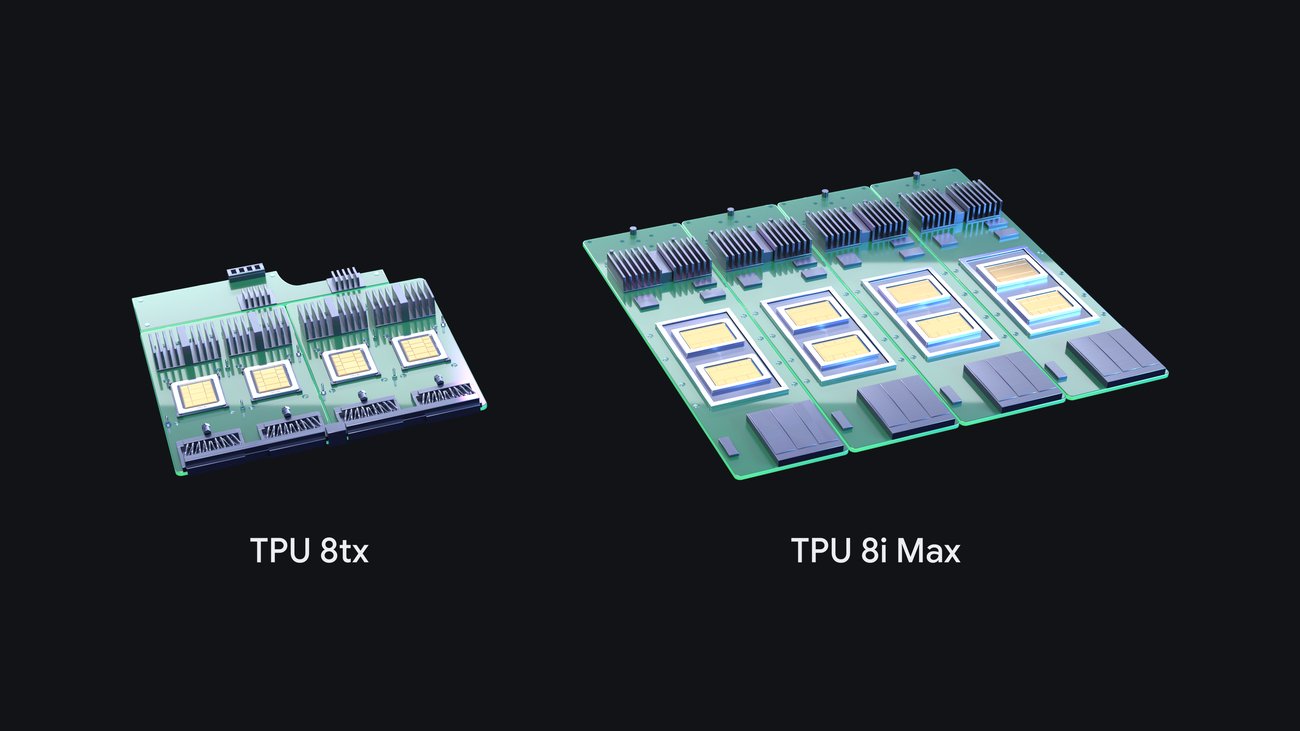
In a significant expansion of its eighth-generation Tensor Processing Unit (TPU) portfolio, Google Cloud has introduced two new systems: TPU 8tx and TPU 8i Max. This latest announcement follows the introduction of two other specialized TPUs earlier this year, making it a remarkable feat to unveil four new systems in a single year.
Understanding TPU 8tx and TPU 8i Max
The TPU 8tx is specifically designed for secure and confidential inference, catering to regulated industries that require stringent data protection. On the other hand, the TPU 8i Max focuses on delivering massive context windows, ideal for complex reasoning tasks. Both systems are engineered to support the growing demand for specialized hardware that can handle intricate agentic workloads.
A Decade of TPU Evolution
Google has been developing TPUs for over ten years, originally driven by internal needs such as voice recognition and language translation. Fast forward to today, and the applications have expanded significantly. The current use cases include:
- Training and serving advanced AI models like Gemini.
- Facilitating agentic workloads.
- Providing cloud services to Google Cloud customers.
- Allowing customers to deploy TPUs in their own data centers.
With nearly 100 customers spanning various sectors—ranging from frontier labs to universities—TPUs have become a pivotal part of AI infrastructure.
Enhancements in Performance and Security
At the Google Cloud Next event held in April, Google unveiled the TPU 8t and TPU 8i, which boasted impressive performance improvements: up to 2.7 times better training performance and an 80% increase in inference price performance compared to the previous generation. The introduction of TPU 8tx and TPU 8i Max builds on this foundation, providing further enhancements tailored to specific needs.
TPU 8tx stands out for its security features, designed to maintain confidentiality during inference. Unlike traditional methods where data is decrypted in memory, TPU 8tx integrates security at the hardware level, ensuring sensitive data remains protected even during processing. This is particularly beneficial for organizations dealing with proprietary models and sensitive information.
Meeting the Demands of Modern AI Workloads
The evolution of AI technology has shifted the focus from human-centric computing to agent-based systems. As businesses increasingly adopt autonomous agents, there is a growing need for accelerators that can manage vast amounts of contextual data. The TPU 8i Max addresses this requirement by offering higher compute density per rack and enabling organizations to tackle complex reasoning tasks efficiently.
Moreover, both TPU 8tx and TPU 8i Max are designed to work seamlessly within Google Cloud’s infrastructure, enhancing accessibility for developers and cloud customers. The combination of modular silicon and an open software stack allows for rapid deployment of new hardware configurations tailored to the fast-paced AI landscape.
Conclusion: A New Era of AI Processing
With the launch of TPU 8tx and TPU 8i Max, Google Cloud is not only reinforcing its commitment to innovation in AI infrastructure but also responding to the evolving needs of its customers. As enterprises increasingly rely on AI for complex tasks, the new TPU systems provide the necessary tools to manage security and performance effectively. This strategic expansion signifies a pivotal moment for both Google Cloud and the broader AI landscape.
Source for the original facts: Original source.