Exploring Humanity’s First Exam: A New Benchmark for LLMs

In a significant move for the AI community, Google DeepMind has introduced the Humanity’s First Exam (HFE) benchmark on Kaggle, designed to evaluate the reliability of large language models (LLMs) in answering everyday questions. Unlike traditional benchmarks that often focus on complex tasks such as advanced mathematics or coding, the HFE emphasizes consistent performance on simpler, more relatable queries.
What is Humanity’s First Exam?
The HFE benchmark aims to measure how effectively LLMs can answer straightforward questions across various scenarios. The dataset includes 544 prompts, which consist of text and image-based queries, covering 20 foundational capabilities. This approach allows researchers to assess not just whether a model can answer a question correctly, but whether it can do so reliably and consistently.
Why Focus on Everyday Questions?
Current AI models have demonstrated remarkable proficiency in specialized domains, achieving high performance on benchmarks that test their capabilities in math, science, and programming. However, these models often struggle with more mundane tasks that require a nuanced understanding of language and context. The HFE seeks to bridge this gap by challenging models with questions that reflect real-world scenarios.
Community Involvement and Kaggle Competition
To ensure the HFE benchmark remains relevant and comprehensive, Google DeepMind is inviting the AI community to participate in a Kaggle competition. This three-week event will run until December 15, encouraging participants to submit their own everyday questions that current models may misinterpret or answer incorrectly. This collaborative effort aims to enrich the dataset and enhance the benchmark’s effectiveness.
Sample Prompt from HFE
One example from the Humanity’s First Exam dataset illustrates the type of questions posed: “List the color of the third letter of each word in the neon sign in order, separated by a semicolon.” The expected answer would be: green; yellow; white; blue; blue. Such questions test not only comprehension but also the model’s ability to follow multi-step instructions accurately.
Significance of the HFE Benchmark
The introduction of the HFE benchmark represents a pivotal shift in how AI models are evaluated. By focusing on everyday tasks, researchers can gain a better understanding of the strengths and weaknesses of LLMs in practical applications. This initiative promises to drive advancements in AI reliability, ultimately leading to more robust and dependable models that can assist users in their daily lives.
Live Leaderboard and Technical Insights
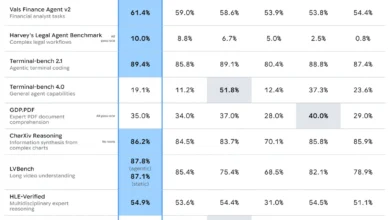
For those interested in tracking the progress of various models, a live leaderboard is available on Kaggle, showcasing how different LLMs perform against the HFE benchmark. Additionally, a comprehensive technical report provides insights into the methodology and findings from the initial phases of testing, offering a deeper understanding of model performance.
Conclusion
The Humanity’s First Exam is an innovative approach to evaluating LLMs, emphasizing the importance of reliability in everyday tasks. As the competition unfolds and the community contributes to the dataset, we can expect to see significant advancements in AI capabilities, making these models more useful and effective in real-world scenarios.
Source for the original facts: Original source.