Revolutionizing Android Development with Bring Your Own Agent Feature
Introduction to AI in Android Development
The landscape of Android app development is evolving rapidly, particularly with the integration of AI-powered tools. These innovations are designed to enhance engineering productivity, allowing developers to utilize specialized AI coding agents and custom solutions tailored to their needs. With Android Studio’s latest updates, the flexibility and openness of agentic Android development are at an all-time high.
Introducing Bring Your Own Agent (BYOA)
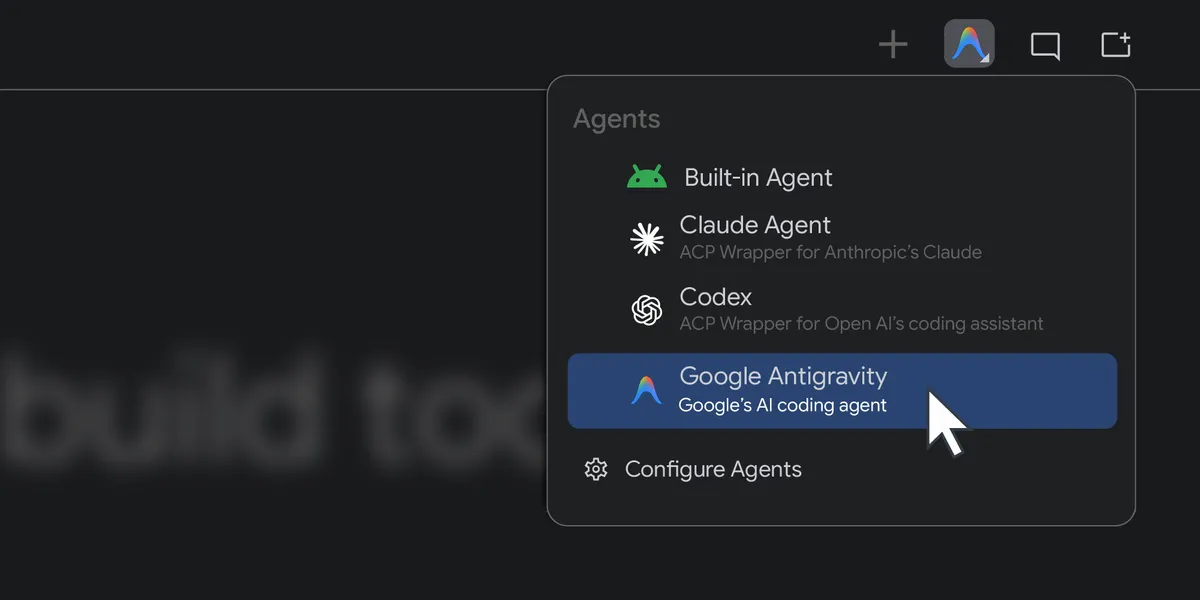
Android Studio has taken a significant leap by introducing the Bring Your Own Agent (BYOA) feature. This allows developers to integrate their preferred AI coding agents seamlessly into the development environment. Notable agents supported include Anthropic’s Claude Agent, OpenAI’s Codex, and Google’s Antigravity. This integration means developers can now supercharge their coding experience using Android Studio’s AI-optimized infrastructure.
Benefits of BYOA
The BYOA feature offers numerous advantages:
- Enhanced Workflow: Agents can plan and execute complete technical workflows directly within Android Studio, unlocking powerful use cases.
- Access to Android Knowledge Base: Agents operating in Android Studio have access to the latest Android best practices, ensuring developers are equipped with up-to-date information.
- Increased Efficiency: BYOA combines your chosen agent with IDE-native intelligence, resulting in faster, more accurate, and cost-effective development processes.
Utilizing Gemini with Antigravity Agent
Many developers have already been utilizing Gemini directly within Android Studio via the built-in agent. However, for an optimized experience, it is recommended to use the Google Antigravity agent. This agent provides access to the latest Gemini models, such as Gemini Flash 3.8, and offers an increased AI usage quota. Developers with a Google AI Pro or Ultra plan can log into the Antigravity agent to leverage their benefits in Android Studio or utilize a pay-per-token model with a Gemini API key.
Enterprise Solutions and Security
For organizations employing Gemini Enterprise, the option to use either the built-in agent or the Antigravity agent remains available. This choice ensures that organizations can continue to benefit from enhanced security and privacy features provided by Google Cloud.
Getting Started with BYOA
The BYOA support is currently rolling out in preview mode, starting with the canary release of Android Studio Rabbit 2. This version features commonly used agents like Google Antigravity, Claude Agent, and Codex. Both enterprise and consumer AI plans are supported, depending on the agent provider. To connect an agent, developers can follow straightforward steps outlined in the Android Studio documentation.
Feedback and Future Developments
Your feedback is crucial as the Android Studio team continues to enhance the AI experience. If you encounter any bugs or issues, reporting them is encouraged to help refine the tools further. The evolution of agentic development is moving towards a future where agents can execute end-to-end tasks under developer guidance, providing unprecedented choice and flexibility in the tools and models used.
Long-Horizon Tasks and Agentic Evaluation
In addition to the BYOA feature, Android Studio is releasing its first set of long-horizon tasks (LHT). These tasks are complex and may take several days or even weeks for engineers to complete. Alongside this, agentic evaluation is being introduced, starting with agents from corresponding model providers. This will further enhance the capabilities of AI agents in the Android development process.
As the Android development community continues to embrace these advancements, the potential for creating high-quality, beautiful Android apps is greater than ever. The integration of AI agents marks a significant step forward in the journey of app development, empowering developers to build in a way that suits their unique needs.
Source for the original facts: Original source.