Unleashing Productivity with Gemini 4 Hydrogen

Google has unveiled its latest innovation in AI, the Gemini 4 Hydrogen, designed to enhance productivity and streamline workflows for developers and everyday users alike. This cutting-edge model promises speed and efficiency, making it a valuable asset for coding and various agentic tasks.
Enhanced Performance Over Previous Models
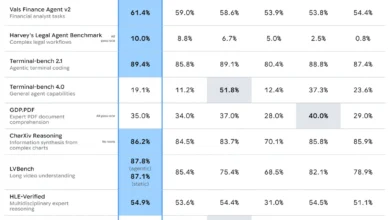
Gemini 4 Hydrogen has outstripped its predecessor, Argon, on the Artificial Analysis Intelligence Index, achieving a score of 51 at its default high thinking level and even reaching 54 at the highest setting. This new model not only excels in performance but also completes tasks faster than many of its contemporaries.
Cost-Effective Token Pricing
With a flat pricing structure, Hydrogen charges $1.50 per million input tokens and $7.50 per million output tokens across its extensive 1 million-token context window. This pricing model is designed to be user-friendly, catering to both individual developers and larger teams.
Multi-Model Collaboration with Orchestrator
A standout feature of Gemini 4 Hydrogen is its ability to work seamlessly in multi-model environments. The introduction of Orchestrator within Google Antigravity allows for dynamic switching between models like Carbon and Hydrogen during the same session. This capability was demonstrated on Terminal-Bench 4.0, where Orchestrator achieved task success rates comparable to Carbon while consuming 24% less quota and completing tasks 19% faster.
Streamlined Workflows for Teams
Hydrogen is not just a standalone model; it is designed to complement other models in complex workflows. For example, Carbon can serve as the coordinator while Hydrogen takes on the roles of worker and verifier agents. This setup facilitates simultaneous builds and tests across isolated workspaces, enabling teams to accelerate project delivery without increasing token costs.
Significant Upgrades from Gemini 3.8 Flash
Transitioning from Gemini 3.8 Flash to Hydrogen offers notable improvements. Hydrogen completes tasks 2.5 times faster at its high default setting and has more than tripled scores on Terminal-Bench 4.1. Additionally, it has significantly reduced fabricated claims and adapts smoothly to tool call failures or empty search results.
Real-World Applications
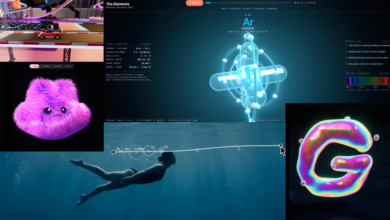
Hydrogen’s capabilities extend beyond mere coding. For instance, it enables on-the-fly 3D coding in Geminisland, allowing users to create custom structures in real time. Moreover, it can build complex e-commerce storefronts in a single session and transform Google Sheets into animated pixel canvases by utilizing Python and conditional formatting.
In terms of presentation creation, Hydrogen can generate multi-slide presentations directly in Google Slides, autonomously auditing and fixing layout issues in the process. Additionally, it helps teams convert financial data into interactive models in Google Sheets, producing outputs over 30% faster than previous iterations.
Flexible Thinking Levels for Diverse Needs
Gemini 4 Hydrogen introduces four distinct thinking levels: low, medium, high (default), and a new xhigh tier. This flexibility allows users to choose the appropriate level of reasoning depth based on their task requirements, ensuring they only pay for the processing power they need.
Improved User Interaction
For everyday users, Hydrogen enhances the experience of interacting with virtual assistants. It improves the assistant’s ability to follow instructions and call appropriate tools, resulting in more reliable outputs with less need for back-and-forth communication.
Overall, Gemini 4 Hydrogen represents a significant leap forward in AI productivity tools, catering to both developers and general users by providing powerful, efficient solutions for a wide range of tasks.
Source for the original facts: Original source.