Exploring the New Multimodal Knowledge Agent Benchmark for AI Models
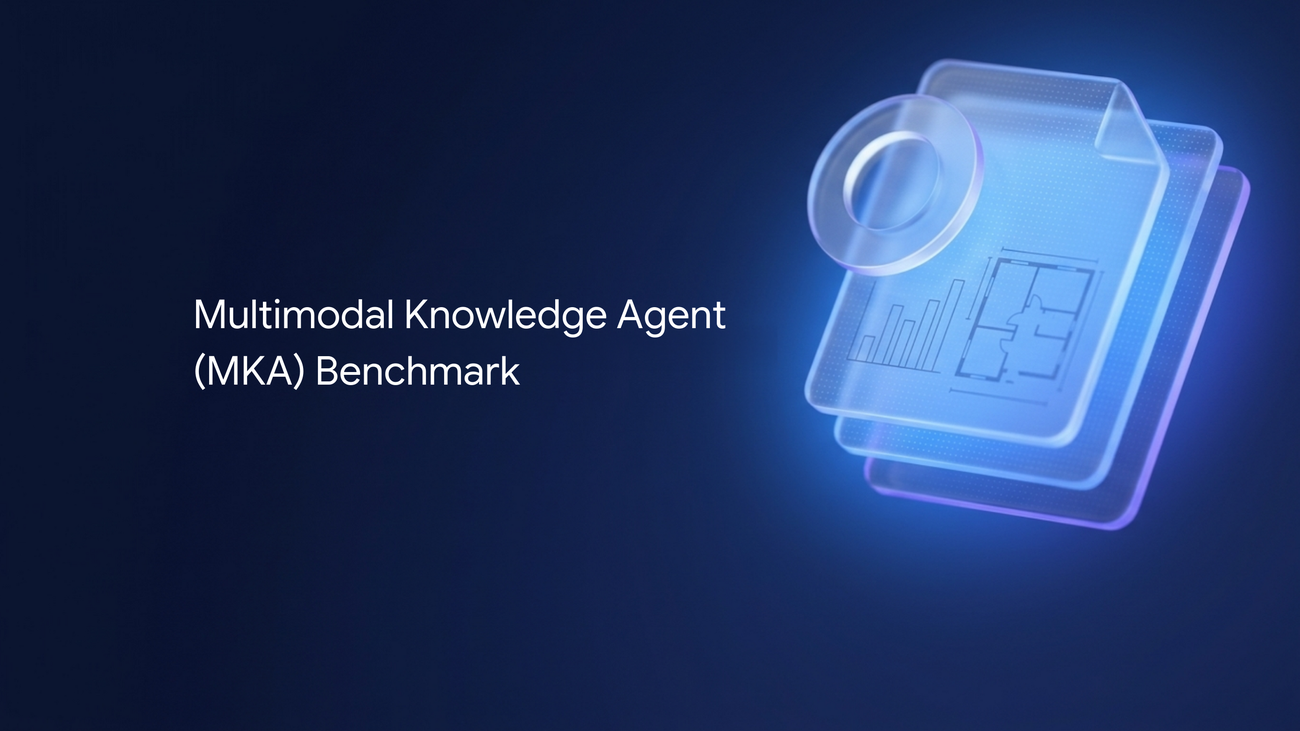
In the ever-evolving landscape of artificial intelligence, the introduction of the Multimodal Knowledge Agent (MKA) benchmark marks a significant advancement in evaluating AI’s reasoning capabilities across visually complex tasks. Developed in collaboration with Artificial Analysis, this benchmark is designed to assess how effectively AI agents can tackle real-world knowledge work tasks that often involve intricate visual elements.
Understanding the MKA Benchmark
The MKA benchmark is grounded in practical workflows, crafted with input from domain experts across ten distinct verticals and 83 different occupations. This collaboration includes professionals from fields such as architecture, biology, underwriting, and data science. Together, they have curated a comprehensive evaluation set comprising 200 tasks that reflect multi-step projects typically requiring three to eight hours of work from seasoned professionals.
Task Design and Evaluation
Each task within the MKA benchmark is paired with a realistic prompt and a collection of multimodal input files. To ensure a rigorous evaluation process, an expert-written rubric has been established, featuring approximately 70 yes/no checks. This rubric emphasizes factual accuracy (weighted at 75%) and visual design (weighted at 25%). This structured approach allows for a nuanced assessment of an AI agent’s performance across various dimensions.
How the Benchmark Works
Starting today, users can explore the MKA benchmark and evaluate their own models using the tools provided by Artificial Analysis. Each model operates within the same open-source agent harness known as Stirrup, ensuring consistency in the evaluation environment. This setup includes identical tools, sandbox conditions, and a defined turn budget for tasks.
Grading Accuracy and Results
An innovative autorater, built on a non-Google model, is employed to grade the deliverables produced by the AI agents. This autorater opens each file, renders pages, inspects spreadsheet formulas, and checks the outputs against the expert rubric. Impressively, when domain experts compared their grading with the autorater’s results, they found a 96% agreement rate, underscoring the reliability of this evaluation method.
Maintaining Task Integrity
To ensure the integrity of the evaluation, Artificial Analysis maintains the privacy of the 200-task evaluation set, preventing any potential leaks into training data or discovery by AI models through search. In addition, a separate set of ten public tasks has been made available on Hugging Face, allowing users to inspect the task format and test their own agents.
Performance Insights
Recent technical reports reveal that different AI models exhibit significant variability in their efficiency when tackling the same tasks. The models tested displayed a wide range of performance, utilizing between 30 and 130 turns on average to complete each task. This variability highlights the critical role of strong perception abilities in successfully addressing the challenges posed by the MKA benchmark. Furthermore, the reports indicate that models often struggle to compensate for the absence of visual input, further emphasizing the importance of multimodal capabilities.
Gemini 4 Carbon: A Leading Model
Among the models evaluated, Gemini 4 Carbon stands out, achieving the second-highest quality score while completing tasks at an average cost that is six times lower than the top-performing model. This positions Gemini 4 Carbon on the Pareto frontier of quality and price within the MKA evaluation framework. Users interested in leveraging Gemini 4 Carbon can access it today through the Gemini API in Google AI Studio. Comprehensive documentation and an updated developer guide are also available to facilitate onboarding.
In conclusion, the Multimodal Knowledge Agent benchmark represents a pivotal step in the assessment of AI models, particularly in their ability to reason through visually complex tasks. As AI technology continues to advance, benchmarks like MKA will play a crucial role in measuring and enhancing the capabilities of intelligent systems.
Source for the original facts: Original source.